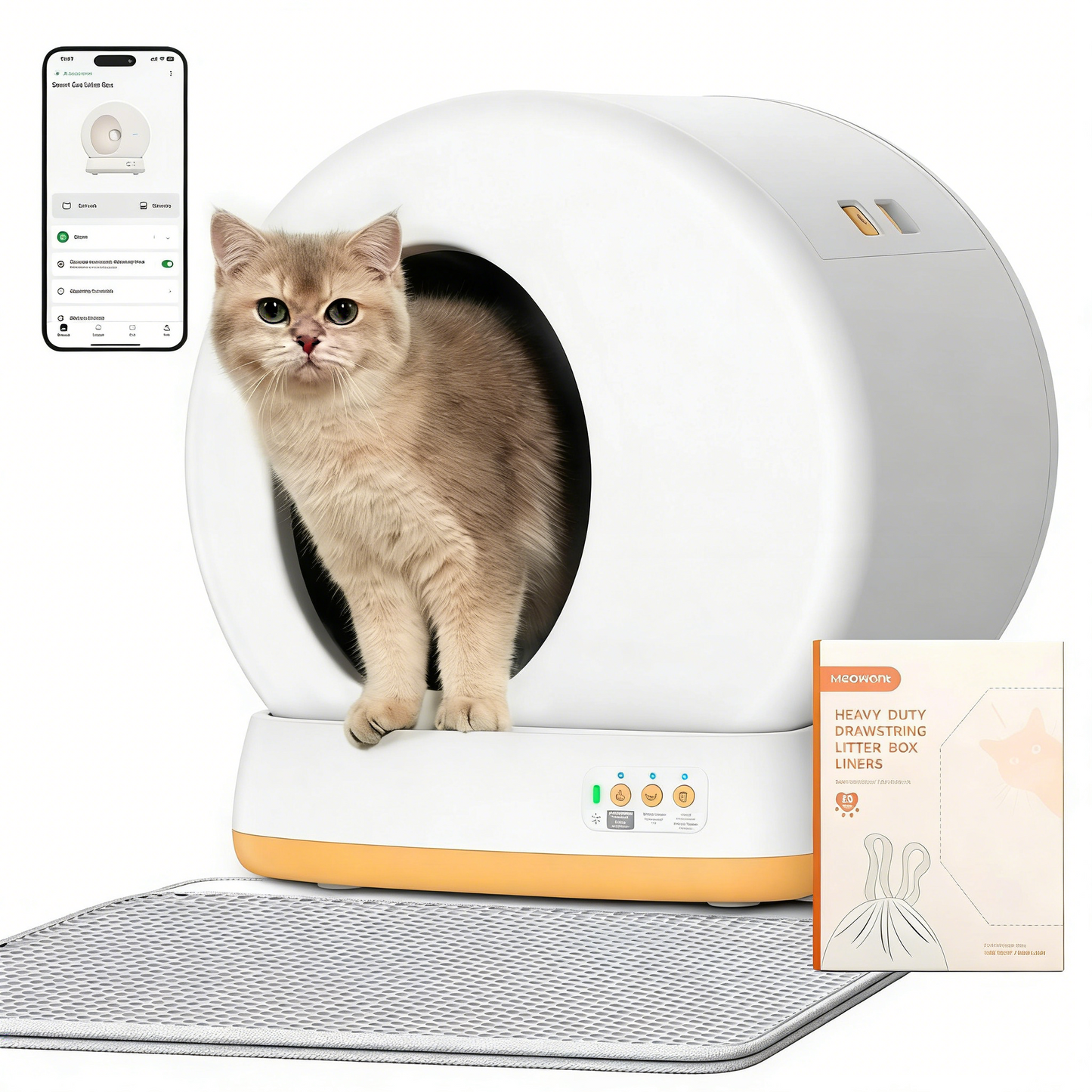
Open vs Enclosed Self-Cleaning Litter Box: Which One Is Best for Your Cat (and Your Home)?

Choosing an automatic litter box isn’t just about “self-cleaning.” The shape and enclosure style—open vs enclosed—can affect your cat’s comfort, odor control, tracking, and even where the unit fits in your home.
This guide breaks down the real-world differences so you can pick the right setup based on your cat’s habits and your space.
Quick Answer
-
Open self-cleaning litter boxes are typically easier for nervous cats, kittens, and seniors—more visibility, easier entry, less “trapped” feeling.
-
Enclosed self-cleaning litter boxes usually offer better splash containment and visual privacy, but can feel tight for some cats and may need extra attention to airflow and internal odor buildup.
If you’re shopping now, here’s a simple starting point:
If your cat is timid or your home is small, open designs often win on comfort and usability.
If your biggest issue is tracking/splash and you want a cleaner look, enclosed designs can be a better match.
Open vs Enclosed: What’s the Difference?
Open Self-Cleaning Litter Box
An open design typically means:
-
open top or large open entry
-
more airflow
-
easier “in and out” access
Enclosed Self-Cleaning Litter Box
An enclosed design typically means:
-
more covered structure
-
more privacy
-
better barrier for scatter/splash (depending on the entry design)
Both can be self-cleaning. The difference is how your cat experiences the space—and how your home handles odor, litter tracking, and placement.
1) Cat Comfort & Confidence
Open often feels safer for:
-
shy or anxious cats
-
cats that like to “scan the room”
-
kittens learning litter habits
-
senior cats that prefer easy entry
Because the space feels less restrictive, many cats adapt faster.
Enclosed can be better for:
-
cats that prefer privacy
-
cats that dig aggressively (if the enclosure reduces scatter)
-
households that want a more “hidden” look
Pro tip: If your cat has ever avoided a covered litter box, start with open.
2) Odor Control: Airflow vs Containment
Odor control is a mix of:
-
how quickly waste is removed
-
airflow/ventilation
-
how “sealed” odor gets inside the unit
Open designs usually have better natural airflow, which can help odors dissipate—especially in smaller rooms.
Enclosed designs can sometimes trap odor inside the chamber if ventilation is limited. If you choose enclosed, prioritize:
-
good internal airflow design
-
consistent cleaning cycles
-
proper placement (not stuffed into a sealed closet)
3) Litter Tracking & Splash: Which One Keeps Floors Cleaner?
If your biggest pain is litter on the floor, consider:
-
entry height and angle
-
step-out distance (cats “kick off” litter when exiting)
-
whether your cat pees high or digs hard
Enclosed often wins on splash control and may reduce scatter—especially for high pee-ers.
Open can still work great if:
-
the walls are high enough
-
the entry is designed to reduce kick-out
-
you use a good litter mat
4) Space, Aesthetics & Where It Fits
Open boxes can feel visually larger, but they’re often easier to place because access isn’t restricted.
Enclosed boxes may look cleaner in a living space, but they usually need:
-
more clearance around the unit
-
more careful ventilation planning
Placement rule: Put the unit where your cat feels safe (not just where it looks best). If the location is too loud or cramped, even the best auto box won’t get used consistently.
5) Noise & “Scary Movement” (Important for First-Time Auto Users)
Both styles can be intimidating if your cat is new to automation. A smooth transition matters more than open vs enclosed.
To improve acceptance:
-
start in manual mode (if available) or run cycles only when your cat isn’t nearby
-
keep the unit in a calm location
-
don’t introduce multiple new things at once (new box + new litter + new location)
Recommendation: Which One Should You Choose?
Here’s the practical, real-life breakdown:
Choose Open if…
-
your cat is shy, anxious, or easily startled
-
your cat is a kitten or senior (needs easy entry)
-
you want faster adaptation and fewer “avoidance” problems
-
you’re mainly fighting odor in a small room
✅ Best for: comfort-first homes, first-time auto box users
Choose Enclosed if…
-
your cat pees high or digs aggressively
-
you want better splash containment
-
you prefer a cleaner look in the room
-
you can ensure ventilation and a good cleaning routine
✅ Best for: mess-control priority, high pee-ers, aesthetic-first placement
What to Look For (No Matter Which Style You Pick)
Use this checklist when comparing models:
-
Cat-friendly entry (easy step-in for kittens/seniors)
-
Stable footing (doesn’t wobble)
-
Safety sensors (pause when your cat approaches/enters)
-
Easy-to-clean surfaces (smooth interior, accessible corners)
-
Odor strategy (waste separation + airflow)
-
Enough internal space (cats must be able to turn around comfortably)
-
Simple maintenance (bags/liners/refills that don’t feel complicated)
Still not sure which style fits your home? Many pet parents choose based on their #1 problem:
-
Odor in a small space → open + airflow-friendly setup
-
Splash / scatter / messy floors → enclosed or higher-wall design + mat
👉 Compare features and details here: https://www.littercore.com/products/littercore-self-cleaning-cat-litter-box-mw-sc02
Setup Tips for Best Results (Open or Enclosed)
-
Place the unit in a calm, accessible area (not next to loud appliances).
-
Add a litter mat to reduce tracking.
-
Keep at least one backup plan during the first week (don’t remove the old box too fast).
-
Run cleaning cycles on a schedule your cat tolerates—especially in week one.
For multi-cat homes, don’t rely on a single unit if usage is heavy. Consider your household traffic and add capacity if needed.
If you want a self-cleaning litter box that supports daily odor control and easier maintenance, you can start here:
✅ Shop the self-cleaning litter box: https://www.littercore.com/products/littercore-self-cleaning-cat-litter-box-mw-sc02
FAQs
Q1: Are enclosed self-cleaning litter boxes better for odor?
Not automatically. Enclosed designs can trap odor if airflow isn’t handled well. The best odor control comes from fast waste removal + good ventilation + consistent routine.
Q2: Will an open self-cleaning box make litter tracking worse?
It can, depending on your cat’s digging style and entry design. High walls and a quality mat can make a big difference.
Q3: Which style is best for kittens?
Most kittens adapt faster to open, easy-entry designs. If you use automation, introduce it gradually and avoid loud cycles near the kitten at first.
Q4: What if my cat is scared of an enclosed box?
Start with an open design or leave the cover off (if the model allows). Build confidence first, then add enclosure later if needed.
Q5: Do I need to change litter type when switching to an auto box?
Not always—but many auto boxes perform best with clumping litter that forms firm clumps. Keep the same litter at first, then adjust after your cat is comfortable.